This is the best reaction that I've yet seen to the presence of the Westboro Baptist Church (except for the awesome SDCC counter-protest):
Well-played, sir.
Showing posts with label ~culture. Show all posts
Showing posts with label ~culture. Show all posts
Monday, April 4, 2011

Friday, March 25, 2011
The good and the bad: Dragon Age and the Akira movie
First, the good news: Dragon Age II is out on a variety of platforms, and the RPG game is flying off the shelves. While the game's main plot is mostly pre-determined, following a whole lot of destiny hoo-ha, the player's choices can greatly affect their character's appearance, actions, and even their sexual orientation.
 |
| The two Hawkes |
The game's creative team at Bioware have not only made it an option for the main character to be male or female, as pictured to the right, but they've also made it possible for male Hawkes to flirt with male team members, and female to flirt with female, leading to in-game romances.
It's a first for mainstream gaming: while the Mass Effect series allowed players to choose the gender of their main character and had female-female romances, male-male options were noticeably verboten, which is unsurprising given the historical stereotype of gamers as being single young white men punching at buttons in the half-light of basements, munching on Cheetos. But times have changed. 40% of gamers are now women, and the average age of a gamer has risen to 35.
One could cynically brush off the move as Bioware's effort to capitalize on this new market and that's definitely part of it; but more than that, it seems to be based on a genuine desire to make the game more inclusive. When a player predictably complained on the Bioware forums with an eye-crossingly privileged post, lead writer David Gaider brought the smackdown in a truly enlightened way:
On the less-awesome side, the script for a live-action version of the classic Akira has apparently been finished and been sent out to several actors for the parts of Kaneda and Tetsuo. Wanna guess what all of these actors have in common?
One could cynically brush off the move as Bioware's effort to capitalize on this new market and that's definitely part of it; but more than that, it seems to be based on a genuine desire to make the game more inclusive. When a player predictably complained on the Bioware forums with an eye-crossingly privileged post, lead writer David Gaider brought the smackdown in a truly enlightened way:
And if there is any doubt why such an opinion might be met with hostility, it has to do with privilege. You can write it off as "political correctness" if you wish, but the truth is that privilege always lies with the majority. They're so used to being catered to that they see the lack of catering as an imbalance. They don't see anything wrong with having things set up to suit them, what's everyone's fuss all about? That's the way it should be, any everyone else should be used to not getting what they want.Freaking awesome.
On the less-awesome side, the script for a live-action version of the classic Akira has apparently been finished and been sent out to several actors for the parts of Kaneda and Tetsuo. Wanna guess what all of these actors have in common?
 |
| *facepalm* |
First person that steps in this joint saying that "it's about finding the best actor for the part, regardless of race" gets punched in the mouth.
Racebending's got a campaign up. Go check it out.
Saturday, March 19, 2011
NFL player is fluent in Netspeech.
For those of you who don't follow American football, the NFL is facing a lockout due to stalled negotiations between the players union and the NFL administrators over salary caps. Now, I don't care much about it either way--it's a bit like watching two high-end divorce lawyers squabble over who has to pick up the dinner check while the minimum-wage staff wait in vain for the table to open up--but I do have to comment on this bit of amazingness: Chris Cluwe, the punter for the Minnesota Vikings, has drawn helpful and humorous images to explain the situation from the players' perspectives.
The pictures are enough to get me on the players' side for the sake of comedy alone, but check out the top-right corner of the second picture!

*laughs forever*
When a player in the NFL is using it in common speech, that's when you know an Internet phrase has achieved cultural saturation and significance. Oxford Dictionary, get on this.
The pictures are enough to get me on the players' side for the sake of comedy alone, but check out the top-right corner of the second picture!

*laughs forever*
When a player in the NFL is using it in common speech, that's when you know an Internet phrase has achieved cultural saturation and significance. Oxford Dictionary, get on this.
Sunday, March 13, 2011
I believe I'll have the ponytail....

"the buzz cut"
Favored by Marines and dykes in on-the-go and fast-paced careers like mechanics and Jello wrestlers. Minimal effort required.
"dreadlocks"
For the discerning feminist-bookstore dyke. The dreads can also double as scarves, and food storage containers. Minimal effort required.
Monday, January 31, 2011
The checkout stand: protecting your children from gay adoption and gynecologists
Last night I was wandering through Fred Meyer and trying to run my brother's heels over with my shopping cart, as one does. He's something of a novice at the whole shopping thing, which means he got the wrong size of petit sirloin beef containers first time around and then he guided his cart towards an actual cashier stand instead of heading for the cold, blessedly human-free embrace of the U-scan checkout.
As we pulled up to the conveyor belt, we entered the Great Tunnel of Candy and Magazines. It's literally impossible not to look around -- I'm sure there have been extensive studies that led to both the Tunnel's strategic placement and the graphic design of every single magazine cover -- so I did my requisite shuddering at the National Enquirer's obsession with celebrity bodies ("BEST AND WORST BEACH BODIES," with helpful arrows pointing out the cellulite), flipped off In Touch ("LINDSAY TELLS ALL: 'I'M DATING TOM HARDY'"; hard money says they've never met) and stared in vague horror at OK! ("TEEN MOM JENELLE -- BEATING HER MOM -- SMOKING POT -- LOSING HER BABY FOREVER!"; the exclamation point makes it extra-classy).
 Then my gaze wandered over to Cosmopolitan and stopped. There was a little black plastic flap over the cover. It didn't say anything on it, but after the recent news about an Oklahoma grocery store that censored a US Weekly cover showing Elton John, his male partner, and their brand new baby boy (pictured to the right in all its non-shocking glory) I recognized a "family shield." Glancing around, I ascertained that yes, every other Cosmo in the store had been similarly covered up.
Pulling the family shield away, I examined the magazine cover for myself. Mila Kunis stared back at me. God, she's hot. She was fully-clothed, though, so unless they're trying to keep her scorching image from damaging the heterosexuality of women everywhere, that wasn't why the family shield had been brought in.
 I took a look at the headlines. "BAD GIRL SEX: 75 VERY NAUGHTY MOVES TO TRY ON A MAN." Well, that's very forthright. The family shield didn't even go high enough to cover that headline, though. "MILA KUNIS: THE ATTITUDE THAT MAKES HER EFFORTLESSLY SEXY." Yeah, right, effortless -- I'm sure it was totally effortless for the 500 stylists, makeup artists, lighting technicians, blotters, fanners, and Photoshop designers who put this image together, let alone whatever crazy diet and exercise regime Ms. Kunis puts herself through in order to look like she does. "GREAT GUY, LAME SEX?" Hah, we can't have men questioning themselves, too, can we?
My bet's on the little one down in the left-hand corner, though: "8 THINGS YOU MUST TELL YOUR GYNO." Everything else is pretty standard fare for the Great Magazine Tunnel, and certainly not anywhere as disturbing as Teen Mom punching out her mother, smoking pot, and losing her kid. But giving women important advice about their vaginas? Whoa, nelly that is just as destructive to society as two happy gay men showing off the new baby they have taken into their home!
As we pulled up to the conveyor belt, we entered the Great Tunnel of Candy and Magazines. It's literally impossible not to look around -- I'm sure there have been extensive studies that led to both the Tunnel's strategic placement and the graphic design of every single magazine cover -- so I did my requisite shuddering at the National Enquirer's obsession with celebrity bodies ("BEST AND WORST BEACH BODIES," with helpful arrows pointing out the cellulite), flipped off In Touch ("LINDSAY TELLS ALL: 'I'M DATING TOM HARDY'"; hard money says they've never met) and stared in vague horror at OK! ("TEEN MOM JENELLE -- BEATING HER MOM -- SMOKING POT -- LOSING HER BABY FOREVER!"; the exclamation point makes it extra-classy).
 Then my gaze wandered over to Cosmopolitan and stopped. There was a little black plastic flap over the cover. It didn't say anything on it, but after the recent news about an Oklahoma grocery store that censored a US Weekly cover showing Elton John, his male partner, and their brand new baby boy (pictured to the right in all its non-shocking glory) I recognized a "family shield." Glancing around, I ascertained that yes, every other Cosmo in the store had been similarly covered up.
Pulling the family shield away, I examined the magazine cover for myself. Mila Kunis stared back at me. God, she's hot. She was fully-clothed, though, so unless they're trying to keep her scorching image from damaging the heterosexuality of women everywhere, that wasn't why the family shield had been brought in.

My bet's on the little one down in the left-hand corner, though: "8 THINGS YOU MUST TELL YOUR GYNO." Everything else is pretty standard fare for the Great Magazine Tunnel, and certainly not anywhere as disturbing as Teen Mom punching out her mother, smoking pot, and losing her kid. But giving women important advice about their vaginas? Whoa, nelly that is just as destructive to society as two happy gay men showing off the new baby they have taken into their home!
Tuesday, January 18, 2011
2010 in Review: women and queers in the media
Apologies for the spotty updates lately: some dreadful events unfolded in my personal life. I'm all right, but it will take a while for things to get back to normal.
Award season is upon us, what better time to look back at what 2010 had to offer us in the way of diversity in media.
The year started off promisingly, with Kathryn Bigelow taking home the Oscar for Best Director for the The Hurt Locker, something no woman had ever done before. I'm including a link to the video here just because I love to watch Barbara Streisand grind her teeth before finally making the announcement. Suck it Babs, you had your chance.
Before I go any further I also want to link to this flowchart, which overthinkingit.com put out this year.

I lurve it.
You won't find Lisbeth Salander on that flowchart. That's because the prickly, bisexual, computer hacker heroine of "The Girl With the Dragon Tattoo" and its sequels defies your petty fucking flowchart. And she'll probably stab you with a bottle and ruin your credit for good measure. This year also brought us "Alice in Wonderland," "The Runaways," "Salt," "Easy A," "Black Swan," and "True Grit," all of which featured strong female heroines. "Let Me In" and "Kickass" deserve special notice: they focused on a man's emotional journey, but had strong female supporting characters who could really have carried their own films. Y'all already know my feelings on the women of "Inception" and Ree Dolly of "Winter's Bone." In all, a pretty damn good year for female characters.
However, there is still a huge dearth of queer representations in mainstream film. "Easy A" had that old trope of a "best gay" for the female lead; "Valentine's Day" included a gay male couple but then marginalized them in the film's advertisements and didn't even let them kiss onscreen. "The Runaways" did feature a lesbian relationship between the two female leads, as did "The Kids Are Alright," and "I Love You Phillip Morris" paired mainstream stars Ewan MacGregor and Jim Carrey as male lovers. But we also had Richard Chamberlain advising gay actors to stay in the closet for the sakes of their careers. And it's notable that all of the above roles were portrayed by straight actors and actresses, or at least no one who was out of the closet.
Things look rosier on the television side of things, especially for both queer representations and queer creators. For the first time since GLAAD began its Responsibility Index in 2005, all five major broadcast networks increased their representation of queer characters during the 2009-2010 TV season, with the CW leading the way. In the 2010-2011 TV season, queer characters represent about 3.9% of all characters on scripted TV series, when only three years ago that number hovered closer to 1%.
This was very apparent at the Golden Globes this last weekend. Glee, aka the "gayest show on television," took home several statuettes, with openly gay creator Ryan Murphy accepting for Best Show, recently-married lesbian Jane Lynch accepting the Best Supporting Actress globe, and the sweet little gay dude of my heaarrrrrrrrrrrt, Chris Colfer, making everyone cry with his Best Supporting Actor acceptance speech:
♥ He is my favorite. No apologies, deal wit' it. Colfer's also expressed interest in writing for film, which I hope he follows through on. We can clearly use some of that queer TV magic on the film screen.
Award season is upon us, what better time to look back at what 2010 had to offer us in the way of diversity in media.
2010
One year closer to the Mayans killing us all.
I think that's how that movie went.
The year started off promisingly, with Kathryn Bigelow taking home the Oscar for Best Director for the The Hurt Locker, something no woman had ever done before. I'm including a link to the video here just because I love to watch Barbara Streisand grind her teeth before finally making the announcement. Suck it Babs, you had your chance.
Before I go any further I also want to link to this flowchart, which overthinkingit.com put out this year.
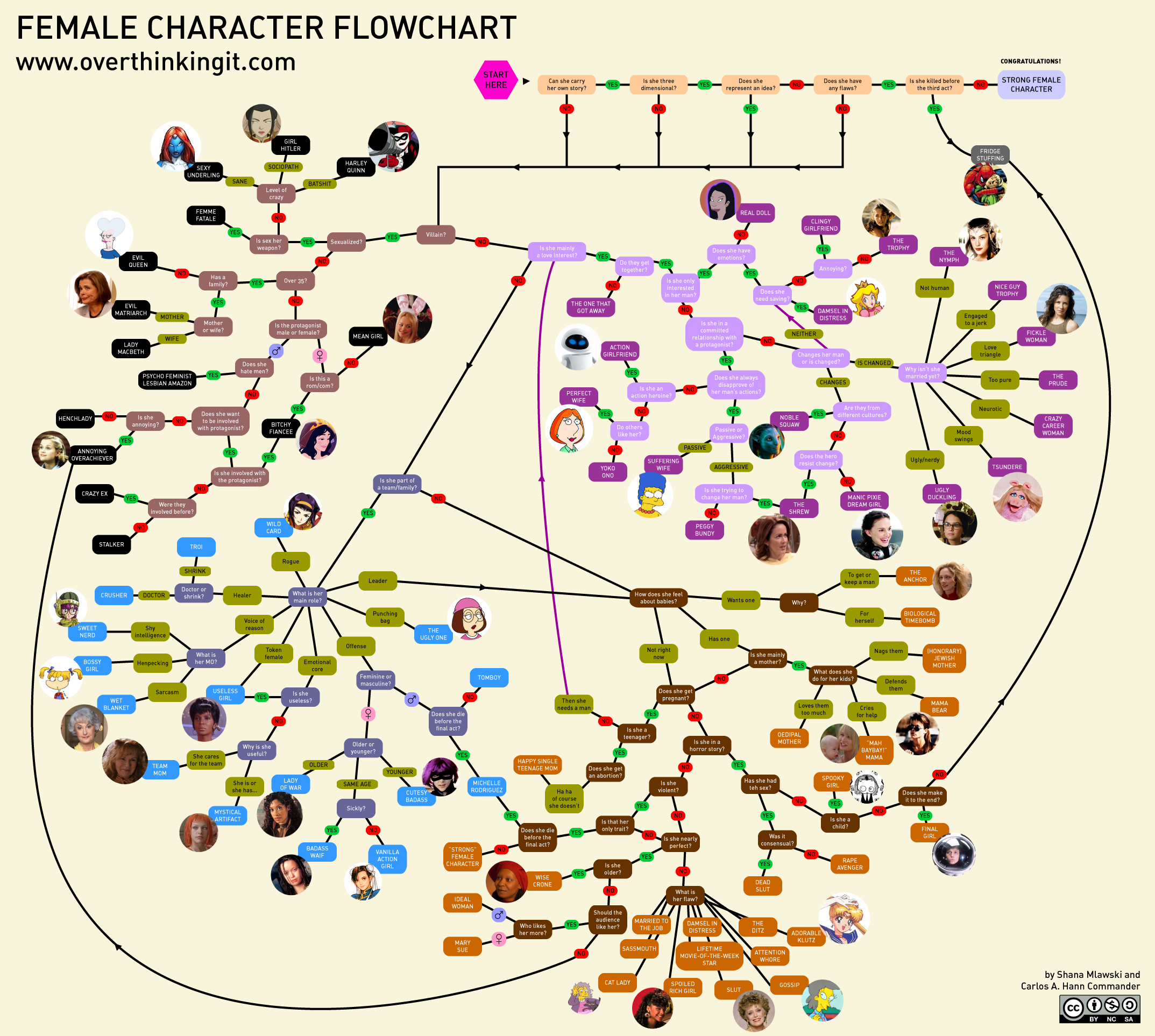
Click for a larger version.
I lurve it.
You won't find Lisbeth Salander on that flowchart. That's because the prickly, bisexual, computer hacker heroine of "The Girl With the Dragon Tattoo" and its sequels defies your petty fucking flowchart. And she'll probably stab you with a bottle and ruin your credit for good measure. This year also brought us "Alice in Wonderland," "The Runaways," "Salt," "Easy A," "Black Swan," and "True Grit," all of which featured strong female heroines. "Let Me In" and "Kickass" deserve special notice: they focused on a man's emotional journey, but had strong female supporting characters who could really have carried their own films. Y'all already know my feelings on the women of "Inception" and Ree Dolly of "Winter's Bone." In all, a pretty damn good year for female characters.
However, there is still a huge dearth of queer representations in mainstream film. "Easy A" had that old trope of a "best gay" for the female lead; "Valentine's Day" included a gay male couple but then marginalized them in the film's advertisements and didn't even let them kiss onscreen. "The Runaways" did feature a lesbian relationship between the two female leads, as did "The Kids Are Alright," and "I Love You Phillip Morris" paired mainstream stars Ewan MacGregor and Jim Carrey as male lovers. But we also had Richard Chamberlain advising gay actors to stay in the closet for the sakes of their careers. And it's notable that all of the above roles were portrayed by straight actors and actresses, or at least no one who was out of the closet.
Things look rosier on the television side of things, especially for both queer representations and queer creators. For the first time since GLAAD began its Responsibility Index in 2005, all five major broadcast networks increased their representation of queer characters during the 2009-2010 TV season, with the CW leading the way. In the 2010-2011 TV season, queer characters represent about 3.9% of all characters on scripted TV series, when only three years ago that number hovered closer to 1%.
This was very apparent at the Golden Globes this last weekend. Glee, aka the "gayest show on television," took home several statuettes, with openly gay creator Ryan Murphy accepting for Best Show, recently-married lesbian Jane Lynch accepting the Best Supporting Actress globe, and the sweet little gay dude of my heaarrrrrrrrrrrt, Chris Colfer, making everyone cry with his Best Supporting Actor acceptance speech:
♥ He is my favorite. No apologies, deal wit' it. Colfer's also expressed interest in writing for film, which I hope he follows through on. We can clearly use some of that queer TV magic on the film screen.
Wednesday, December 15, 2010
Monday, December 6, 2010
Life on the Internet: The Social Network review (***1/2/****)
Winter's Bone and Inception finally have some competition for my favorite movie of 2010. For anyone who hasn't seen The Social Network yet, you really must. Let me count the ways:
Obviously the great irony here is that the world's biggest social network was built by a completely socially inept misanthrope who severed his own personal bonds one by one on the path to that illustrious 500 million "friends." Jesse Eisenberg is fantastic as that misanthrope, all tics and blankness and motor-mouthed insults, with just the faintest quiver of sorrow underneath. He can see the relationships around him unraveling but is so swept up in his own genius that he can't figure out how to stop.
The film leaves ambiguous just how much validity lies in the lawsuits, or in the suits who are pressing them. Zuckerberg might have led on "the Winklevii" (as he dubs them) in order to develop his own website before theirs got off the ground; but then again, as Mark himself puts it in the film, "If somebody makes a chair he does not owe money to everyone in the history of the world who made a chair." The Saverin lawsuit is more one-sided: recently leaked emails and IMs show that not only did Zuckerberg and Parker shaft Saverin, the real-life version of events was even more cold-blooded than the movie depicts. Saverin eventually settled for an undisclosed sum, 5% of the company shares, and has been re-instated on the site as the co-founder.
Despite that victory it's hard not to feel for Eduardo, especially as played by the British-born Garfield. He has an innate likeability and humanity to him that, as the film progresses, actually becomes a burden. Eduardo never had a chance to understand or keep up with Facebook: he was too human. Facebook--and most social networking websites--have forever changed the way we relate to other human beings. It has brought the world closer together and made us more alone than ever before. Sorkin himself commented on Facebook in an interview: “I feel like social networking is to socializing what reality TV is to reality. In a way we’re performing for each other.”
That's what Mark was looking for: a way to present himself as something better, someone who could keep a girlfriend and make it into fraternities. Someone desirable. Sean Parker understood Facebook better than Mark himself; he's a walking performance, all self-invention and narcissism. But Eduardo, with his nice-but-not-too-nice suits, gentlemanly manners, and slightly-pathetic desire for an emotional connection with Mark (pathetic only in how impossible that wish turns out to be), is squarely a city-dweller in the land of the Internetites. He exists outside of the machine. He is just himself.
Which makes his betrayal all the much more effective and poignant. When he finally flips out, the first thing he does is smash Mark's laptop, forcing him to disconnect and--finally and possibly for the last time in Mark's life--have a real-life human interaction. Eduardo's anger is our anger, because there is that tiny, betrayed part in all of us who hungers for something that no blinking cursor can give us.


- Aaron Sorkin script that assumes, nay, demands intelligence and attention to keep up.
- Excellent direction by David Fincher, that master of alienation.
- Oscar-worthy performances by Jesse Eisenberg, Andrew Garfield, and Justin Timberlake. Yes, Justin Timberlake.
- Trent Reznor wrote the buzzing, menacing score, which I am listening to right now. It's available for download at the price of $5. (Also, anyone who wants to catch the strange, lovely cover of "Creep" that was featured in the trailer, it was done by Scala.)
- A prophecy of our modern lives, as provided by Timberlake's character Sean Parker, the erstwhile founder of Napster: "We lived in farms, then we lived in cities, and now we're gonna live on the internet!"
Obviously the great irony here is that the world's biggest social network was built by a completely socially inept misanthrope who severed his own personal bonds one by one on the path to that illustrious 500 million "friends." Jesse Eisenberg is fantastic as that misanthrope, all tics and blankness and motor-mouthed insults, with just the faintest quiver of sorrow underneath. He can see the relationships around him unraveling but is so swept up in his own genius that he can't figure out how to stop.
The film leaves ambiguous just how much validity lies in the lawsuits, or in the suits who are pressing them. Zuckerberg might have led on "the Winklevii" (as he dubs them) in order to develop his own website before theirs got off the ground; but then again, as Mark himself puts it in the film, "If somebody makes a chair he does not owe money to everyone in the history of the world who made a chair." The Saverin lawsuit is more one-sided: recently leaked emails and IMs show that not only did Zuckerberg and Parker shaft Saverin, the real-life version of events was even more cold-blooded than the movie depicts. Saverin eventually settled for an undisclosed sum, 5% of the company shares, and has been re-instated on the site as the co-founder.
Despite that victory it's hard not to feel for Eduardo, especially as played by the British-born Garfield. He has an innate likeability and humanity to him that, as the film progresses, actually becomes a burden. Eduardo never had a chance to understand or keep up with Facebook: he was too human. Facebook--and most social networking websites--have forever changed the way we relate to other human beings. It has brought the world closer together and made us more alone than ever before. Sorkin himself commented on Facebook in an interview: “I feel like social networking is to socializing what reality TV is to reality. In a way we’re performing for each other.”
That's what Mark was looking for: a way to present himself as something better, someone who could keep a girlfriend and make it into fraternities. Someone desirable. Sean Parker understood Facebook better than Mark himself; he's a walking performance, all self-invention and narcissism. But Eduardo, with his nice-but-not-too-nice suits, gentlemanly manners, and slightly-pathetic desire for an emotional connection with Mark (pathetic only in how impossible that wish turns out to be), is squarely a city-dweller in the land of the Internetites. He exists outside of the machine. He is just himself.
Which makes his betrayal all the much more effective and poignant. When he finally flips out, the first thing he does is smash Mark's laptop, forcing him to disconnect and--finally and possibly for the last time in Mark's life--have a real-life human interaction. Eduardo's anger is our anger, because there is that tiny, betrayed part in all of us who hungers for something that no blinking cursor can give us.
I would be remiss in my duties as a feminist if I did not mention the depiction of women in this film, or the lack thereof. Other than Erica, effectively played with intelligence and strength by Rooney Mara in the 5 minutes of screentime that she gets, the female characters are all one-dimensional, either there as (mostly Asian) arm candy or as lawyerly exposition devices. Other reviews have commented on this already, and Sorkin has defended himself in the media by saying that it accurately reflects the misogyny in tech culture.
I am actually inclined to accept Sorkin's defense, especially given his decent track record with female characters. (David Fincher is another story, but he wasn't the one writing the script.) Sorkin may have bent the truth, but there's only so much bending one can do in a culture of angry nerd boys who extoll the virtues of beautiful Asian women as the ultimate girlfriend, as Saverin does in the movie and Zuckerberg does in real life.
Sunday, December 5, 2010
A Man's Castle: Paranormal Activity and the American Marriage
(Note: this contains spoilers for both Paranormal Activity and its sequel.)
In 2007, an Israeli-born aspiring director and writer named Oren Peli set up a film shoot in his own home. Using a home video camera, two actors he hired for $500 off of Craigslist, and the barest outlines of a script, he shot a ghost (or demon, to be more accurate) story that kicked around Slamdance and some other LA horror festivals before it clawed its way up the ladder to Steven Spielberg's lap.
Released in 2009, Paranormal Activity cost just $15,000 to make, but went on to gross almost $200 million worldwide. For those keeping score, that officially makes it the most profitable movie of all time, in terms of return on investment. It spawned a sequel that appropriately came out around Halloween 2010. Shot in a similar manner, that one cost a cool $3 million and has so far made $166 million worldwide, still a gaping profit margin. There are rumblings of a third.
I find it difficult to believe that the simple storyline and setup can work for a longer franchise, but both films managed to be chilling and effective. And not only because of the things that go bump in the night: the films also portray the all-too human demons that plague American marriages. In both movies, the demonic possessions of women are heavily--if inadvertantly--aided by the callousness and carelessness of the women's husbands.
In PA1, Micah and Katie are "engaged to be engaged," but have been cohabitating for a while when the movie starts, long enough to settle into a marriage-like existence. When weird things start happening around the house, Micah insists on filming them, despite Katie's misgivings. This has happened to her--and her sister--before, when they were kids. Micah doesn't listen to her wishes, though, and starts challenging the dark force inhabiting their house. Katie calls in a paranormal expert; Micah scoffs at the idea and bullies her into not calling a demonologist on the expert's advice. He insists that he can fix this himself, saying, "This is my house, you're my girlfriend, I will handle it." He breaks promises to Katie and buys an Oujia board. Every move only escalates the problem until it manifests into full-on demonic possession. By that time, you're almost rooting for the demon to kill this douchebag. You'd be right.
In PA2, which acts as a prequel, concurrent movie, and sequel all at once, Katie's sister Kristi has just had a baby boy with her husband Dan, adding to their household that includes a daughter, Ali, from Don's previous relationship, a superstitious Hispanic nanny named Martine (magical non-white person alert), and a German Shepherd. When strange things start happening around their house, all the women in the house have strong reactions: Kristi recalls some childhood hauntings, Martine burns incense and chants to keep the demon at bay, Ali is at first excited but changes her mind once she does a little research. The dog worriedly stands guard over the baby.
All is for naught, though, because Dan is the kind of guy who will blame a supernaturally-slammed door on the wind and refuses to listen to any arguments to the contrary. No action is taken, as his opinion is apparently the only one that matters. Hell, even the (female) dog's agitated barking goes unheeded, except by the demon, who puts her in puppy hospital. When events finally escalate beyond Dan's ability to explain away, the solution Martine presents is horrifying: they will use a crucifix to transfer the demon to the next blood relative, Katie, thus setting the events of PA1 in motion. Ali protests, but Dan whips out a line that echoes Micah's--"It's my house, it's my wife and my son. This is my decision."
All of this becomes even more interesting once you consider the fact that neither PA1 nor 2 employed a conventional script. Instead they used "retro-scripting," in which the director laid out basic scenarios and plot developments then let the actors make up their own dialogue. Now, it is entirely possible that two separate directors instructed their lead actors to go the route of chest-thumping king of the house, but it's also possible that the actors went that way on their own. I tend to believe the latter: in both films there was a sense of hesitancy on the actors' parts before they committed to claiming dominance over their house and everyone (female) within it; once they had, then it was full-steam ahead. That says a lot about how engrained that kind of male dominance still is in our households and especially in our marriages.
Except then it backfires, in both cases, rather spectacularly. In PA1, Micah's taunting and the toxic energy around their marital squabbles allow the demon to worm its way into Katie's head. Her first act of possession is to kill Micah. She then saunters over to PA2 and the Reys' house, where she snaps Dan's neck like a twig and kills Kristi.
I hesitate to call this a feminist commentary, both because it's still an otherworldly force attempting to possess the bodies of women, and Kristi is about as innocent and powerless a victim as one can find. However, the movies subtly make the point that the demonic possession is almost beside the point: these women have already lost control over their lives and bodies to the men in their homes.
In 2007, an Israeli-born aspiring director and writer named Oren Peli set up a film shoot in his own home. Using a home video camera, two actors he hired for $500 off of Craigslist, and the barest outlines of a script, he shot a ghost (or demon, to be more accurate) story that kicked around Slamdance and some other LA horror festivals before it clawed its way up the ladder to Steven Spielberg's lap.
Released in 2009, Paranormal Activity cost just $15,000 to make, but went on to gross almost $200 million worldwide. For those keeping score, that officially makes it the most profitable movie of all time, in terms of return on investment. It spawned a sequel that appropriately came out around Halloween 2010. Shot in a similar manner, that one cost a cool $3 million and has so far made $166 million worldwide, still a gaping profit margin. There are rumblings of a third.
I find it difficult to believe that the simple storyline and setup can work for a longer franchise, but both films managed to be chilling and effective. And not only because of the things that go bump in the night: the films also portray the all-too human demons that plague American marriages. In both movies, the demonic possessions of women are heavily--if inadvertantly--aided by the callousness and carelessness of the women's husbands.
In PA1, Micah and Katie are "engaged to be engaged," but have been cohabitating for a while when the movie starts, long enough to settle into a marriage-like existence. When weird things start happening around the house, Micah insists on filming them, despite Katie's misgivings. This has happened to her--and her sister--before, when they were kids. Micah doesn't listen to her wishes, though, and starts challenging the dark force inhabiting their house. Katie calls in a paranormal expert; Micah scoffs at the idea and bullies her into not calling a demonologist on the expert's advice. He insists that he can fix this himself, saying, "This is my house, you're my girlfriend, I will handle it." He breaks promises to Katie and buys an Oujia board. Every move only escalates the problem until it manifests into full-on demonic possession. By that time, you're almost rooting for the demon to kill this douchebag. You'd be right.
In PA2, which acts as a prequel, concurrent movie, and sequel all at once, Katie's sister Kristi has just had a baby boy with her husband Dan, adding to their household that includes a daughter, Ali, from Don's previous relationship, a superstitious Hispanic nanny named Martine (magical non-white person alert), and a German Shepherd. When strange things start happening around their house, all the women in the house have strong reactions: Kristi recalls some childhood hauntings, Martine burns incense and chants to keep the demon at bay, Ali is at first excited but changes her mind once she does a little research. The dog worriedly stands guard over the baby.
All is for naught, though, because Dan is the kind of guy who will blame a supernaturally-slammed door on the wind and refuses to listen to any arguments to the contrary. No action is taken, as his opinion is apparently the only one that matters. Hell, even the (female) dog's agitated barking goes unheeded, except by the demon, who puts her in puppy hospital. When events finally escalate beyond Dan's ability to explain away, the solution Martine presents is horrifying: they will use a crucifix to transfer the demon to the next blood relative, Katie, thus setting the events of PA1 in motion. Ali protests, but Dan whips out a line that echoes Micah's--"It's my house, it's my wife and my son. This is my decision."
All of this becomes even more interesting once you consider the fact that neither PA1 nor 2 employed a conventional script. Instead they used "retro-scripting," in which the director laid out basic scenarios and plot developments then let the actors make up their own dialogue. Now, it is entirely possible that two separate directors instructed their lead actors to go the route of chest-thumping king of the house, but it's also possible that the actors went that way on their own. I tend to believe the latter: in both films there was a sense of hesitancy on the actors' parts before they committed to claiming dominance over their house and everyone (female) within it; once they had, then it was full-steam ahead. That says a lot about how engrained that kind of male dominance still is in our households and especially in our marriages.
Except then it backfires, in both cases, rather spectacularly. In PA1, Micah's taunting and the toxic energy around their marital squabbles allow the demon to worm its way into Katie's head. Her first act of possession is to kill Micah. She then saunters over to PA2 and the Reys' house, where she snaps Dan's neck like a twig and kills Kristi.
I hesitate to call this a feminist commentary, both because it's still an otherworldly force attempting to possess the bodies of women, and Kristi is about as innocent and powerless a victim as one can find. However, the movies subtly make the point that the demonic possession is almost beside the point: these women have already lost control over their lives and bodies to the men in their homes.
Tuesday, November 16, 2010
14-year-old is way more eloquent than you
In Ann Arbor, Michigan, a teacher was recently suspended for disciplining a student who had used hate speech against gays. The teacher is fighting the decision.
This is Graeme Taylor, who is a 14 year old student, speaking in support of the teacher. He is gay. I want him to run for president.
This is Graeme Taylor, who is a 14 year old student, speaking in support of the teacher. He is gay. I want him to run for president.
Wednesday, October 20, 2010
Why I don't support the injunction against DADT.
I joined the Army when I was 17, a couple of months after 9/11. At first I was in the reserves as a PFC, but then I received an ROTC scholarship and went to college to train for the officer ranks.
I'm also queer. I was active in the GLBTA and there were some nights when I would attend both an Army training session and a queer pride fundraiser in the same night.
I know firsthand the damage that DADT does to individual soldiers, unit cohesion, and the Armed Forces in general. It requires queer soldiers to either limit their social contact with their comrades to the point that they never have to lie about their personal lives, or it compromises their honor. It removes skilled technicians from the ranks at a time when we are fighting two wars and desperately need them.
DADT is wrong by every standard we could apply: constitutionally, morally, and functionally.
But placing an injunction against it that slaps the whole system down is not the right way to go about ending DADT. I know the military. If there isn't a very detailed manual telling them how to deal with a situation then they just...won't. And there will be situations to deal with: the soldiers around me in the cadet ranks were tolerant to the point that several knew about me and chose not to say anything, but enlisted combat units? Those are the guys who either didn't have the IQ for Armor or actually wanted to be enlisted Infantry. In the words of Joe, an enlisted Infantry soldier I spoke to a couple months ago on the subject, "We're the kind of pricks who'd shoot a fag."
Basically, if this injunction stands, we will see dead queer soldiers. We will hear rumors of beatings and abuses, but the chaos of such an abrupt change would leave queer soldiers with no proper channels to make a complaint. We will see a spike in friendly fire. We will essentially have thrown them in there with no safety net, no protections, and no way to defend themselves. Then we'll get the regulations and support network--but it will be reactionary and too late for some.
We need to do this the right way. We need to give the military time to set up proper support that can ease the transition--and that's key, making it a transition. An injuction in federal court that ends DADT so abruptly is not good for the Armed Forces and it's definitely not good for queer soldiers.
I'm also queer. I was active in the GLBTA and there were some nights when I would attend both an Army training session and a queer pride fundraiser in the same night.
I know firsthand the damage that DADT does to individual soldiers, unit cohesion, and the Armed Forces in general. It requires queer soldiers to either limit their social contact with their comrades to the point that they never have to lie about their personal lives, or it compromises their honor. It removes skilled technicians from the ranks at a time when we are fighting two wars and desperately need them.
DADT is wrong by every standard we could apply: constitutionally, morally, and functionally.
But placing an injunction against it that slaps the whole system down is not the right way to go about ending DADT. I know the military. If there isn't a very detailed manual telling them how to deal with a situation then they just...won't. And there will be situations to deal with: the soldiers around me in the cadet ranks were tolerant to the point that several knew about me and chose not to say anything, but enlisted combat units? Those are the guys who either didn't have the IQ for Armor or actually wanted to be enlisted Infantry. In the words of Joe, an enlisted Infantry soldier I spoke to a couple months ago on the subject, "We're the kind of pricks who'd shoot a fag."
Basically, if this injunction stands, we will see dead queer soldiers. We will hear rumors of beatings and abuses, but the chaos of such an abrupt change would leave queer soldiers with no proper channels to make a complaint. We will see a spike in friendly fire. We will essentially have thrown them in there with no safety net, no protections, and no way to defend themselves. Then we'll get the regulations and support network--but it will be reactionary and too late for some.
We need to do this the right way. We need to give the military time to set up proper support that can ease the transition--and that's key, making it a transition. An injuction in federal court that ends DADT so abruptly is not good for the Armed Forces and it's definitely not good for queer soldiers.
Saturday, October 9, 2010
Fighting hate with laughter
I think of all the It Gets Better videos thus far, this one is my favorite: a bunch of queer comedians got together at the Gotham City Comedy Club for a night of laughter and encouragement.
This is a great runner-up, though: a cop and a Marine, in uniform, in love.
This is a great runner-up, though: a cop and a Marine, in uniform, in love.
Monday, October 4, 2010
Bullying and the It Gets Better Project
I don't know what is sadder about this interview: the fact that the father seems so horribly guilt-ridden, or that he keeps accidentally referring to his deceased son in the present-tense.
On the subject of bullying, Dan Savage has started the It Gets Better Project on Youtube, in which queer adults record video messages aimed at their teenage counterparts, encouraging them to hang in there in hopes of a better life. I'm not too familiar with Dan Savage's politics and I know he's done or said some things in the past that ticked people off; however, I very much like the project itself, and wish that I had a camera so that I could contribute. I especially liked Sarah Silverman's message:
So true.
If you feel like submitting something, please do! My socially-isolated, miserable past teenaged self thanks you and would have been very much encouraged by something like this as a kid.
On the subject of bullying, Dan Savage has started the It Gets Better Project on Youtube, in which queer adults record video messages aimed at their teenage counterparts, encouraging them to hang in there in hopes of a better life. I'm not too familiar with Dan Savage's politics and I know he's done or said some things in the past that ticked people off; however, I very much like the project itself, and wish that I had a camera so that I could contribute. I especially liked Sarah Silverman's message:
So true.
If you feel like submitting something, please do! My socially-isolated, miserable past teenaged self thanks you and would have been very much encouraged by something like this as a kid.
Tuesday, September 28, 2010
Because whore means exactly what we all think it means.
Indie band The Like recently gave an interview in which they disparaged Lady Gaga for dressing like a "whore," and insisted that they were much better than that. Which, first of all:
I don't think I've ever seen Lady Gaga's nipples. If I had, however, I'm pretty damn sure that Lady Gaga would have WANTED me to see her nipples.
But more importantly than their sour grapes and hypocrisy, it bears repeating that it is never okay to shame other artists or other women for not expressing their sexuality in a way--within morality--that falls in line with our own choices and how we present ourselves.
I could get snippy here about how The Like look and act like they stepped straight out of a softcore American Apparel ad, all doe eyes and long hair and coy smiles and really short skirts; but that is how they choose to dress and IT IS VALID. It is a valid aesthetic to shoot for, and it will help sell their albums just as Lady Gaga's brash, alien-queen outfits help sell HER albums. And there is nothing wrong with that, nothing wrong with using one's sexuality to sell a product...so long as one acknowledges it then doesn't turn around and criticize someone else for doing the exact same thing, just in a different way.
Seriously, ladies, stop tearing each other down. I don't listen to either of your albums, but there are precious few female success stories in the industry.
 |
| "The Like" lead singer Z Berg |
But more importantly than their sour grapes and hypocrisy, it bears repeating that it is never okay to shame other artists or other women for not expressing their sexuality in a way--within morality--that falls in line with our own choices and how we present ourselves.
I could get snippy here about how The Like look and act like they stepped straight out of a softcore American Apparel ad, all doe eyes and long hair and coy smiles and really short skirts; but that is how they choose to dress and IT IS VALID. It is a valid aesthetic to shoot for, and it will help sell their albums just as Lady Gaga's brash, alien-queen outfits help sell HER albums. And there is nothing wrong with that, nothing wrong with using one's sexuality to sell a product...so long as one acknowledges it then doesn't turn around and criticize someone else for doing the exact same thing, just in a different way.

Seriously, ladies, stop tearing each other down. I don't listen to either of your albums, but there are precious few female success stories in the industry.
Thursday, September 9, 2010
Silken tresses fluttering in the ----- SHWACK
NY Mag's Vulture has a fluffy piece about the fashion choices of recent female action heroines. On the surface it's pretty meaningless, but they do address a pet peeve of mine: women fighting with their goddamn hair in their goddamn faces. (Never watch an Army movie with me. I will sit there the entire time grousing about flyaway hairs and trousers untucked from boots. Female soldiers do not wear ponytails, dammit, it's high-and-tight or a tight bun!)
I have hair all the way down my back. There is nothing more annoying than having it slip free and fall in my face, and I'm not even doing battle with ravening zombies/slathering aliens/killer robots on a daily basis. (Woe.)
I guarantee you that the first thing any real-life woman would do when facing battle with a baddie is tie back and/or hack off her hair. Yet these movie heroines are doing backflips and firing guns and riding helicopters with their long locks fluttering free in the breeze. I keep waiting for one of their silken tresses to get stuck in a rotator blade.
But maybe that's the point. Mass media insists that long hair is sexy, and dangerous woman are usually sexified (as if in order to make up for the fact that she can kick a man's ass--don't worry, dudes, you can still imagine her sucking your dick!). It's sexy becuase it's vulnerable, because it would be totally and completely impractical in an actual fight. It's a way of declawing them.
(Vulture's 100% right about Milla Jovovich, too. Hotcha.)
I have hair all the way down my back. There is nothing more annoying than having it slip free and fall in my face, and I'm not even doing battle with ravening zombies/slathering aliens/killer robots on a daily basis. (Woe.)
I guarantee you that the first thing any real-life woman would do when facing battle with a baddie is tie back and/or hack off her hair. Yet these movie heroines are doing backflips and firing guns and riding helicopters with their long locks fluttering free in the breeze. I keep waiting for one of their silken tresses to get stuck in a rotator blade.
But maybe that's the point. Mass media insists that long hair is sexy, and dangerous woman are usually sexified (as if in order to make up for the fact that she can kick a man's ass--don't worry, dudes, you can still imagine her sucking your dick!). It's sexy becuase it's vulnerable, because it would be totally and completely impractical in an actual fight. It's a way of declawing them.
(Vulture's 100% right about Milla Jovovich, too. Hotcha.)
Saturday, July 31, 2010
The Deep Freeze: Christopher Nolan's woman problem
fridge, v. to kill off a female character solely for the purpose of giving the story's main male hero a reason to angst. Coined by Gail Simone in response to a storyline in The Green Lantern in which the hero's girlfriend is killed and literally stuffed in his refrigerator. In 1999, Simone started a website, Women in Refrigerators, that lists all of the comic book women who have been fridged.
Unless you've been living under a rock lately, you've heard of director Christopher Nolan's new movie Inception. It's a long-generating story, one that he's been working on for over a decade, biding his time and building up enough of a reputation in Hollywood that he could get the backing for his dazzling mindfuck of a pet project.
And build up a reputation he has: Nolan has had a string of hits, both financially and critically. On the review-aggregating site Rotten Tomatoes, not one of his films rates below a 75%. His last movie, The Dark Knight, grossed over 1 billion dollars worldwide. There are precious few filmmakers in Hollywood who have so successfully balanced artistic achievements with the culture of spectacle, not so much infusing blockbusters with a decent story as crafting intricate scripts that just so happen to have blockbuster potential.
It's a goddamn shame, then, that he feels the need to fridge the hell out of his women.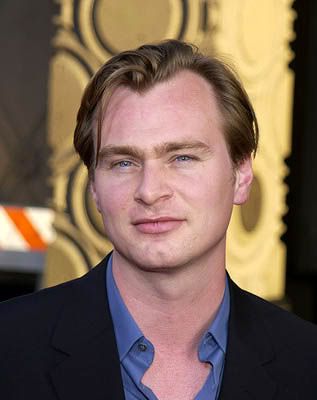
In case you haven't figured it out by now, THIS POST CONTAINS MAJOR SPOILERS FOR ALMOST EVERY CHRISTOPHER NOLAN MOVIE EVER MADE. Also, I am not a scientist or a professional researcher.
Don't get me wrong: I love Christopher Nolan's movies. Memento is one of my favorites. I own The Dark Knight. Next week I will see Inception for the third time in theaters. But there's always a lingering icky feeling after the credits roll, when I watch the actors' names rise from the bottom of the screen and try to remember whether any of the women listed did anything important other than die. More often than not, the answer is a resounding no. And when they do live, they're usually evil.
Don't believe me? Let's have a look.
CASE STUDY: Memento (2000)
The movie that made us all sit up and go, "Christopher WHO?" A crackerjack film noir told in reverse about an amnesiac named Leonard (Guy Pearce) who's looking for the man who killed his wife...or is he?
The women:

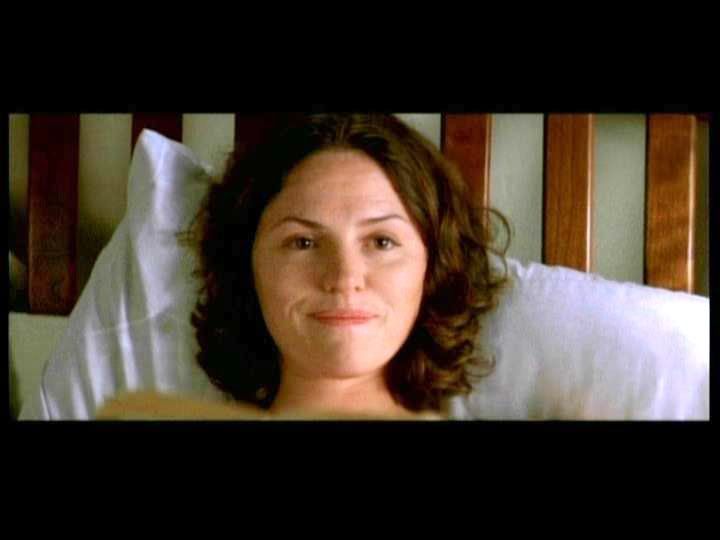 Leonard's Wife (Jorja Fox). No, seriously, Leonard's Wife is her official credit. She didn't get a fucking name either. Oy. Anyway, she actually sort of dies twice in the movie, once when she and Leonard are first attacked; she survives the attack, but Leonard doesn't remember that, and the loss drives him through most of the film. It's revealed at the end, though, that she was actually the one with the insulin, and Leonard invented Sammy Jankis and his wife in order not to deal with the guilt. So really we get two dead-because-of-her-husband-wives for the price of one. Dead.
CONCLUSIONS: Two dead, unnamed wives inadvertantly killed by their husbands' conditions; one femme fatale. We're off to a bangup start. Movie also fails the Bechdel Test: at no point in the movie do two women even speak to each other.
The Bechdel Test: a litmus test developed by writer Alison Bechdel in 1985 to gauge the agency and autonomy of a story's characters. The test has three parts: 1) Are there two female characters who 2) talk to each other 3) about something other than a man?
CASE STUDY: Insomnia (2002)
Detective Frank Dormer (Al Pacino) hunts for serial killer Walter Finch (Robin Williams) in Alaska with the assistance of a local cop named Ellie Burr (Hilary Swank). After he accidentally shoots his partner and covers it up, though, he and the killer wind up morally entangled, and Ellie gets suspicious.
The women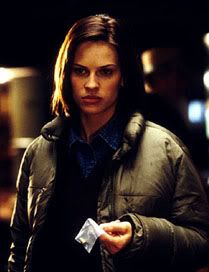
Kay Connell (Crystal Lowe). Every serial killer story needs a naked, beaten female victim, and teenaged Kay Connell fits the bill. She's already dead before the opening credits, so we only glimpse her in flashbacks and as a bloated corpse on a morgue slab. (I couldn't find any pictures of her that weren't naked and mutilated, so I didn't put one up.) Dead.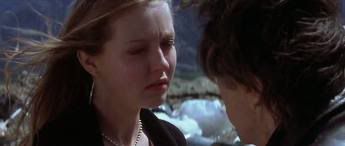
Madonna-Whore complex: a psychological condition in which men divide women into ultra-"pure" Madonnas who can never be sullied with sexual intimacy, and dirty, dirty Whores who can never possibly be wives or mothers. As in men's minds, so in culture. For example: every single Taylor Swift video, ever.

CONCLUSIONS: Not so bad. We have two strong, principled, professional women, though one of them is technically an antagonist. We've also got a dead, mutilated teenager and a Whore, but...it kinda balances out? No on the Bechdel Test: no two women speak to each other through the whole movie.
CASE STUDY: Batman Begins (2005)
Taking over the Batman franchise, Nolan took him back to his roots for an origin story, detailing how Bruce Wayne trained himself into a crime-busting machine.
The women woman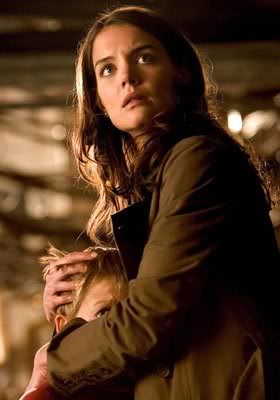
CONCLUSIONS: No chance at the Bechdel test, but Rachel is still a fairly good female character...
CASE STUDY: The Dark Knight
Nolan's second entry in his revival of the Batman movies.
The women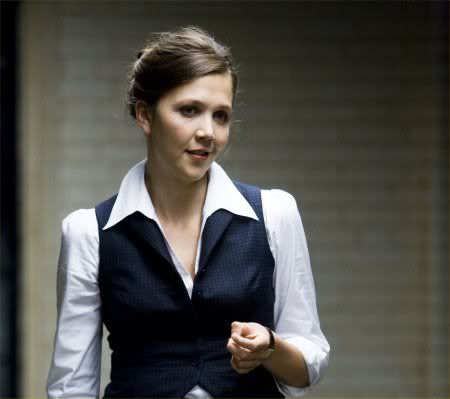

Barbara Gordon (Melinda McGraw): Exists in the movie solely to be Gordon's wife, mother of his children, and a Madonna. The only time she's ever seen outside their home is when she and her children are taken hostage by Two-Face; she puts up absolutely no fight even when the dude has a gun to her son's head. (And while we're on the subject of Gordon's family: Gordon's son is "Jim Gordon, Jr." but guess what his daughter's credited as? "Jim Gordon's Daughter." That's right, she gets no name, and it's made explicit in the movie that she's not her father's favorite. Nice.) Alive, but a Madonna.
ETA: I totally forgot about Judge Surrilo! You know, the female judge who was willing to preside over Dent's prosecution of all the mobsters at once. You know--the one who gets blown up. Yeah, that one. Dead.
CONCLUSIONS: All the women are either dead, evil, or a Madonna. The film sort of passes the Bechdel test in that Ramirez calls Barbara Gordon to warn her that she should leave the house; but that's done at Two-face's gunpoint, so it's sketchy at best. Apparently the only way to get women to talk to each other in Nolan movies is to point a gun at them.
CASE STUDY: The Prestige
Two rival magicians, Angier (Hugh Jackman) and Borden (Christian Bale), duke it out in turn-of-the-century England.
The women
Julia (Piper Perabo). Angier's wife. Drowns--half-naked and bound, onstage--during a botched magic trick; the messup was possibly Borden's fault, and her death incites the antipathy between the two. The manner of her death is of some importance: there's a strong undercurrent through the movie about the sacrifices that magicians make for their craft, and it's understood that women are a necessary sacrifice. See below. Dead.
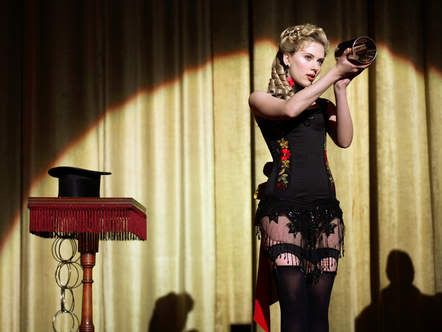
CONCLUSIONS: Two dead wives, twice the manpain. (Or well, triple, if you count the twins separately.) This story, too, was an adaptation; but, again, Nolan chose to take this project on. Something about dead wives really appeals to him. Sarah and Olivia do speak to each other once, but only so that Sarah can object to Olivia calling her husband "Freddie," so it's definitely about a man.
CASE STUDY: Inception, 2010
A team of extractors led by Dom Cobb (Leonardo Dicaprio) invades the mind of an energy magnate, but they're dogged by a shade from Cobb's past, Mal (Marion Cotillard).
The women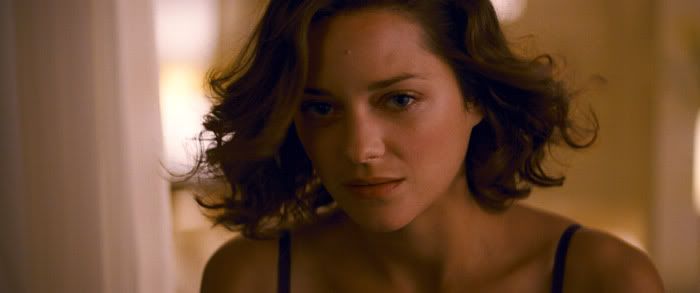
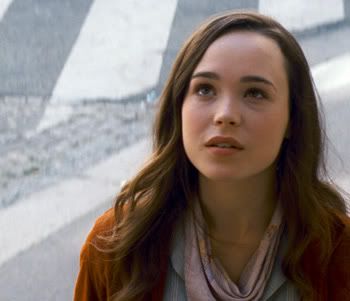
CONCLUSIONS: A decidedly mixed bag. The very best and worst, packed into one. It also comes closest to passing the Bechdel test: Ariadne and Mal talk, but Mal is technically a projection of Cobb's mind and their conversation was subtextually about Cobb. So it's debatable.
SUMMARY OF FINDINGS.
+ Going through the IMDB database, I counted up the number of named characters in the above movies. (Although as we've seen, "named" is a fairly relative term -- "Gordon's Daughter" and "Leonard's Wife," for example.) There were 94 names roles for all of Nolan's major films. (I'll confess I haven't seen Following or Doodlebug. If someone has, please chime in.) (ETA: Somebody did chime in! Ryan Meray reports: "In Following, the only woman in the film dies. Also fails the Bechdel test.") Even being generous with what constitutes a name, only 23 of those roles belonged to women.
+ Of those 23, only 17 had speaking roles (more than one line).
+ Of those 17, only 9 were alive at the end of the movie.
+ Of those 9, 5 were antagonists, Whores, or Madonnas.
+ That just leaves the hotel manager in Insomnia (who apparently has a name -- I was generous there), Rachel Dawes in Batman Begins, Olivia in The Prestige, and Ariadne in Inception. One of them dies in a later film, and one "dies" in a dream, one is almost a Whore, and one barely has a name.
+ Of the 6 women who are wives in Chris Nolan movies, only Barbara Gordon survives her movie. Of the other 5, 4 commit suicide.
+ Of the 8 women who die, 6 are inarguably cases of fridging. Remember, "fridging" means killing a woman off solely to give the main male hero a reason to angst. The two wives in Memento match this profile to a T, as do the two wives in The Prestige, Mal in Inception, and Rachel Dawes in The Dark Knight.
But fridging is obviously only part of a larger problem in Nolan's cinescape. Recent studies have shown that women get only about 30% of the speaking roles in films and tv shows, despite making up half the population. In Nolan movies, only 23% of the named roles are women. I haven't the wherewithal to examine the percentage of speaking roles that belong to women, but I'm guessing that it's not many.
Again, let me be clear that I am a fan of Nolan. I belive he's a visionary. But speaking as a woman who watches his movies, I find myself longing to see someone like me onscreen, who doesn't die horribly. I want to believe that he is better than this. I want to believe that he just hasn't been challenged on it yet.
Consider this your gauntlet, Mr. Nolan.
Thursday, July 1, 2010
New hormone potentially erases lesbianism and other masculine behavior in fetuses
This is some of the most terrifying news that I've heard in a while: an endocrinologist in New York named Maria New has for several years been encouraging pregnant women to take a steriod called dexamethasone, ostensibly to prevent congenital adrenal hyperplasia (CAH). CAH can mess up a kid's adrenal glands and require lifetime steriod treatment, as well as cause ambiguous genitalia in girls. One might think that studying ways to prevent this condition might not be so controversial, and yet:
I don't know what's scarier, the possibility that the treatment doesn't work -- as testified to by some of the women who took the steroid during pregnancy and whose children now suffer birth abnormalities -- or the possibility that it does.
If this steriod was actually effective in altering the physical appearance, behavior, and sexual orientation of a girl fetus, I could easily see a groundswell of support building for its widespread usage, among the same people who abhor fetal stem cell research. Because experimenting on babies is totally legit as long as it supports their cultural agenda. Gotta make girl babies more GIRLY, and eager to make more babies.
The challenge here is . . . to see what could be done to restore this baby to
the normal female appearance which would be compatible with her parents
presenting her as a girl, with her eventually becoming somebody's wife, and
having normal sexual development, and becoming a mother. And she has all the
machinery for motherhood, and therefore nothing should stop that, if we can
repair her surgically and help her psychologically to continue to grow and
develop as a girl. -New, 2001
Gender-related behaviors, namely childhood play, peer association, career and
leisure time preferences in adolescence and adulthood, maternalism, aggression,
and sexual orientation become masculinized in 46,XX girls and women with 21OHD
deficiency [CAH]. These abnormalities have been attributed to the effects of
excessive prenatal androgen levels on the sexual differentiation of the brain
and later on behavior . . . We anticipate that prenatal dexamethasone therapy
will reduce the well-documented behavioral masculinization. -New and colleague Saroj Nimkam, 2010
I don't know what's scarier, the possibility that the treatment doesn't work -- as testified to by some of the women who took the steroid during pregnancy and whose children now suffer birth abnormalities -- or the possibility that it does.
If this steriod was actually effective in altering the physical appearance, behavior, and sexual orientation of a girl fetus, I could easily see a groundswell of support building for its widespread usage, among the same people who abhor fetal stem cell research. Because experimenting on babies is totally legit as long as it supports their cultural agenda. Gotta make girl babies more GIRLY, and eager to make more babies.
Tuesday, June 15, 2010
Art Imitates Life?: actress Romola Garai on misogyny
The recent film The Killer Inside Me, starring Casey Affleck as a 1950's West Texas deputy sherrif who's secretly a psychotic killer, has generated a great deal of controversy due to several scenes of graphic violence.
Need I even add that the violence in question is perpetrated on women?
Critics have variously praised the film, condemned it, defended the violence as essential to the storyline, and questioned whether it was worth the storyline. No one, however, has rivaled the critical response of one Romola Garai. An actress who you most likely know as the teenaged Briony Tallis of Atonement, Garai provides her own examination of The Killer, of cinema in general, and society at large. It is startlingly insightful:
I'm not sure whether I agree with her or not -- after all, life often imitates art, and our cultural palate is formed by the media we devour -- but she raises interesting points.
Need I even add that the violence in question is perpetrated on women?
Critics have variously praised the film, condemned it, defended the violence as essential to the storyline, and questioned whether it was worth the storyline. No one, however, has rivaled the critical response of one Romola Garai. An actress who you most likely know as the teenaged Briony Tallis of Atonement, Garai provides her own examination of The Killer, of cinema in general, and society at large. It is startlingly insightful:
It is also a misogynistic film – but why shouldn't it be? I would argue
that something dark is lurking between the sexes and that it is seeping out into
cinema. [...] Isn't cinema simply responding to a fear of – and desire to punish
– women, especially materially successful or sexually active women?
The world has changed quickly and, for some men, there is anger,
confusion and frustration at that change – a feeling of displacement and
uselessness that is driving a wedge between the sexes. It isn't a predicament I
feel much sympathy for but I believe it exists and should be allowed to be
expressed.
I'm not sure whether I agree with her or not -- after all, life often imitates art, and our cultural palate is formed by the media we devour -- but she raises interesting points.
Thursday, June 10, 2010
Mama, don't let your girls grow up to be cowboys.
You know what I really want?
I want there to have been at least ONE WOMAN on this list.
I have this whole dissertation about why all of our classic heroes these days are anti-heroes, and how that relates to Vietnam -- specifically, the massacre at My Lai 4 -- and how the American dream has a desperate need to parody itself in order to reaffirm that no, really, we are the good guys, despite all the evidence and dead Vietnamese civilians to the contrary.
The short version says that, well, all our classic heroes these days are anti-heroes. To not have ONE woman on that list is either a strong indication of the list-maker's bias, or our ongoing inability as a culture to see women as something to be admired, something heroic.
I mean, hello, STARBUCK??? If they're going to put Mal on there, then where the hell is Kara Frakking Thrace?
I want there to have been at least ONE WOMAN on this list.
I have this whole dissertation about why all of our classic heroes these days are anti-heroes, and how that relates to Vietnam -- specifically, the massacre at My Lai 4 -- and how the American dream has a desperate need to parody itself in order to reaffirm that no, really, we are the good guys, despite all the evidence and dead Vietnamese civilians to the contrary.
The short version says that, well, all our classic heroes these days are anti-heroes. To not have ONE woman on that list is either a strong indication of the list-maker's bias, or our ongoing inability as a culture to see women as something to be admired, something heroic.
I mean, hello, STARBUCK??? If they're going to put Mal on there, then where the hell is Kara Frakking Thrace?
Saturday, June 5, 2010
The Mohr test
I was thinking about the Bechdel Test today, and how in certain circles it's become shorthand for how to evaluate a given media product's treatment of female characters. The test:
Now, try to think of a single movie, novel, comic book, or TV show, even one, in which there are 1. Less than two men, 2. who never talk to each other, 3. about anything other than a woman.
The Bechedel test might seem simplistic: obviously a story can be female-negative but still pass these requirements, and vice versa. But it is a fast and easy way to evaluate a story's attitudes towards female presence, community, and independence.
And then I started thinking about A Single Man, that recent Oscar-bait movie starring Colin Firth as a gay man who's lost his partner to a car accident. Some members of the queer community flocked to the movie but I avoided it like the plague: I have no desire to watch yet another queer character (SPOILER ALERT) be sad and miserable and alone and then die at the end of the movie.
In fact, I'm hard-pressed to think of one movie or TV show in which an openly-queer (or even just heavily-subtexted queer) character has a happy ending, or at least doesn't frickin' DIE. The only one that comes to mind is the movie Shelter. Jury's still out on Kurt Hummel of the TV show Glee.
So I'm thinking that we need a Bechdel test for queer characters. (Really, we need one for characters of color, too, but I would not at all presume to make one. I am not the moral authority of racial issues, dear God.) The test would go something like this:
1. If there are ten characters in a story, then at least one of them is a queer person
2. Who is actually shown to be queer (they kiss someone of the same sex, or are mentioned as having a significant other, or anything that shows they're not a Will&Grace-neutered version of "gay")
3. And isn't thematically punished for being queer.
We'll call it the Mohr test, unless someone can think of something better.
1. It has to have at least two women in itThis sounds simple -- but you'd be amazed. For instance, the film Nine, despite having nine women, does not pass. The Dark Knight does, barely. The novel Boneshaker, which I just reviewed, passes. The comic book Preacher (ugh) passes. None of the original Star Wars films pass. None of The Lord of the Rings trilogy pass, in either film or book form.
2. Who talk to each other
3. About something besides a man.
Now, try to think of a single movie, novel, comic book, or TV show, even one, in which there are 1. Less than two men, 2. who never talk to each other, 3. about anything other than a woman.
The Bechedel test might seem simplistic: obviously a story can be female-negative but still pass these requirements, and vice versa. But it is a fast and easy way to evaluate a story's attitudes towards female presence, community, and independence.
And then I started thinking about A Single Man, that recent Oscar-bait movie starring Colin Firth as a gay man who's lost his partner to a car accident. Some members of the queer community flocked to the movie but I avoided it like the plague: I have no desire to watch yet another queer character (SPOILER ALERT) be sad and miserable and alone and then die at the end of the movie.
In fact, I'm hard-pressed to think of one movie or TV show in which an openly-queer (or even just heavily-subtexted queer) character has a happy ending, or at least doesn't frickin' DIE. The only one that comes to mind is the movie Shelter. Jury's still out on Kurt Hummel of the TV show Glee.
So I'm thinking that we need a Bechdel test for queer characters. (Really, we need one for characters of color, too, but I would not at all presume to make one. I am not the moral authority of racial issues, dear God.) The test would go something like this:
1. If there are ten characters in a story, then at least one of them is a queer person
2. Who is actually shown to be queer (they kiss someone of the same sex, or are mentioned as having a significant other, or anything that shows they're not a Will&Grace-neutered version of "gay")
3. And isn't thematically punished for being queer.
We'll call it the Mohr test, unless someone can think of something better.
Subscribe to:
Posts (Atom)